


 All News
 Cities continue to grow. Urban pressure is increasing, mobility is becoming more demanding, and quality of life is playing an increasingly central role in both individual and corporate decision-making. In this context, a new reality is emerging: well-located urban land is becoming one of the most scarce and strategic resources in contemporary cities.
Having available land is no longer enough. It is now increasingly critical to secure territories that offer connectivity, services, centrality, and future appreciation potential. Location is no longer merely a factor of convenience; it is becoming a structural driver of urban development and real estate investment.

For decades, the real estate sector followed a relatively simple logic: build where space was available and keep pace with the outward expansion of cities. Today, this equation has changed. Value no longer lies solely in land availability, but also in a territory’s ability to offer functional proximity and urban quality.
Well-positioned projects tend to benefit from factors such as:
This combination is reshaping how investors, developers, and users assess the potential of an asset. Decisions increasingly incorporate variables such as commuting time, the quality of public space, and the capacity to create vibrant, multifunctional urban hubs.

With less qualified land available, the solution does not necessarily lie in expanding city boundaries, but in intelligently densifying.
Density does not mean urban overload. It means making better use of existing territory, promoting mixed uses, and creating balanced urban environments. Projects that integrate housing, work, retail, and leisure help reduce commuting needs, strengthen neighbourhood vitality, and improve infrastructure efficiency.
In this context, the compact and proximity-based city is gaining relevance as an urban model capable of simultaneously addressing environmental, economic, and social challenges.
Urban regeneration plays a strategic role in this new phase of real estate. Recovering former industrial areas or underused territories makes it possible to create new centralities without consuming additional land, while reinforcing the identity of places.
More than a physical rehabilitation process, regeneration represents an opportunity to redesign the relationship between the city, the community, and investment. By introducing new uses, activating public space, and strengthening connectivity, regeneration contributes to building more resilient and future-ready territories.
This type of intervention can generate meaningful impacts:
Spark, in Matosinhos, illustrates this approach by transforming a former industrial area into a new centrality integrated into the city and its mobility and service networks.ços.

In an increasingly demanding market, investors and developers recognise that the true differentiator lies in the urban context in which projects are embedded.
Assets located in consolidated areas, with appreciation potential and the capacity to adapt to different uses, tend to demonstrate greater resilience across economic cycles. Proximity to employment hubs, universities, mobility infrastructure, and high-quality public spaces enhances both attractiveness and investment sustainability.
Residential projects such as Bloom Living, in Maia, highlight the importance of integrating housing within urban contexts that offer services, retail, and efficient connections to city centres. In such cases, location is not merely a functional advantage — it is a strategic value-creation element.
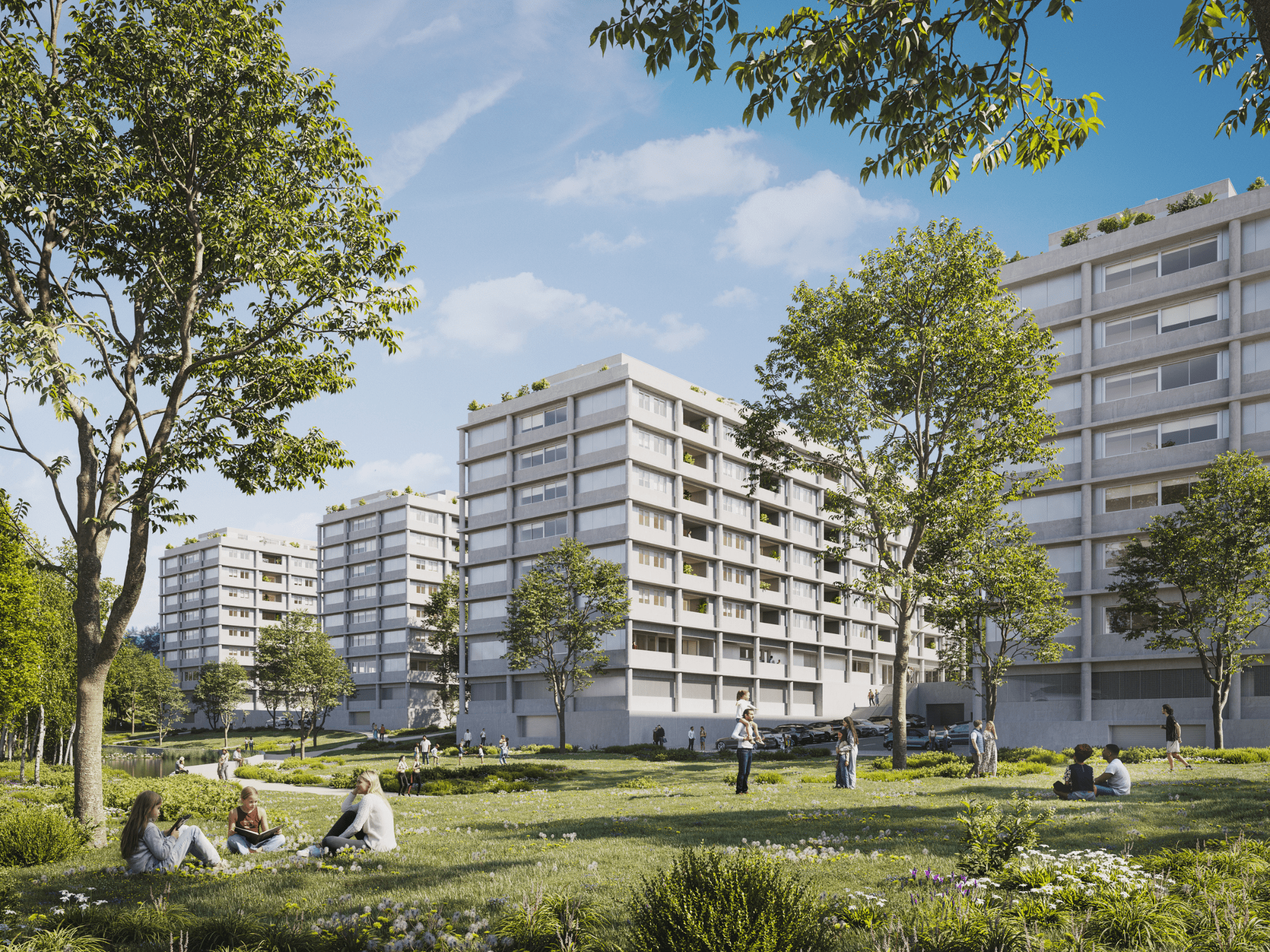
The new urban scarcity is not simply a matter of the quantity of available land, but above all of quality and long-term vision. Building in the right place, with appropriate programmes and strong territorial integration, will increasingly determine project success.
In a transforming sector, understanding the value of territory is essential to creating relevant, sustainable, and lasting solutions. Because the future of real estate is no longer measured only in square metres, but in the ability to design cities that truly work.
Back to the top